The three eras: analog, digital and AI
Growing up across the analog, the digital and the AI worlds: a reflection on the vertigo, the risks and the opportunity of this new era, and on how it is changing the way we do research.
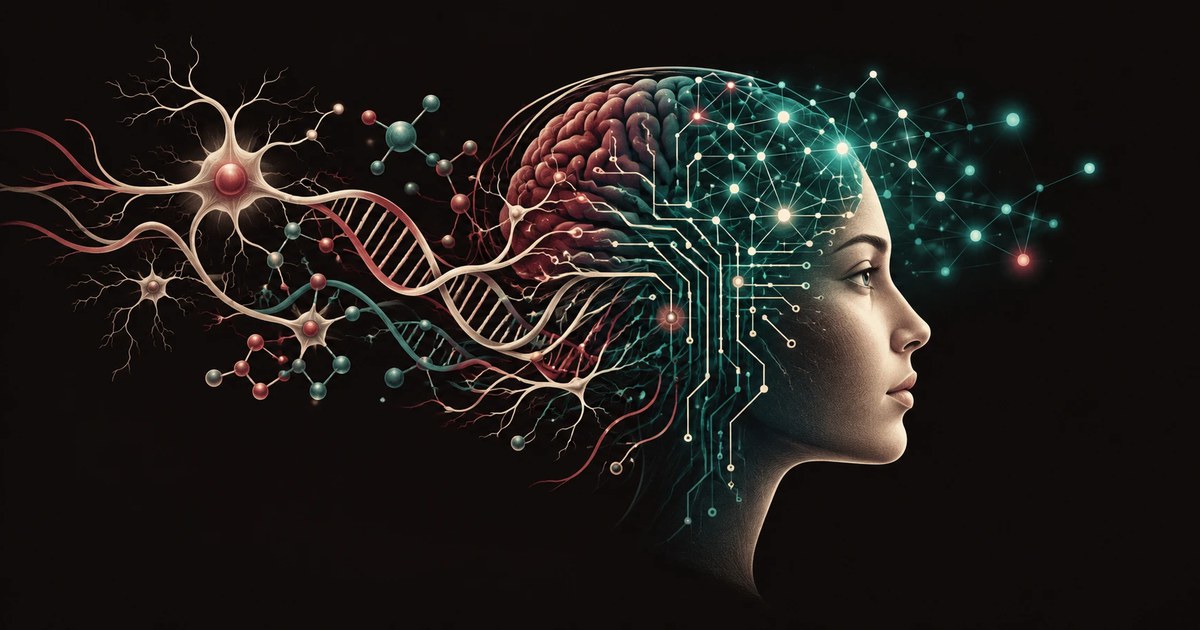
Those of us born in the 1980s can count ourselves lucky. We grew up in an almost entirely analog world, and that is how we learned to think and how our first cognitive abilities took shape. Then, in the middle of our teens, in the 1990s, Microsoft burst in with its first versions of Windows running on utterly revolutionary, “futuristic” computers. I remember perfectly my astonishment at seeing a mouse work for the first time, and the windowing systems that briefly upended my way of thinking. We also lived through, right in the middle of our training, the whole revolution of the internet and the unstoppable rise of social media. We had to adapt to that too; the alternative was to become digitally illiterate. Now it is time to adapt once again, this time to the unstoppable revolution of artificial intelligence (AI). Much of my generation has had to develop —and has therefore demonstrated— a flexibility of thought and a cognitive resilience probably without precedent. Having lived through these three eras —the analog, the digital and now the AI one— has been, without doubt, a genuine challenge of survival and, at the same time, a tremendous stroke of luck.
Yet all this potential is put to the test by a technology as promising as it is unsettling. A clear example of that double edge: barely five years ago, researchers Fabio Urbina and Sean Ekins (of Collaborations Pharmaceuticals), together with collaborators from King’s College and the Swiss Spiez laboratory, demonstrated the enormous potential of AI and, at the same time, warned of the serious dangers of its use in unscrupulous hands: in under six hours, on a modest computer (a 2015 Mac), they trained a model that generated some 40,000 toxic molecules; among them, it rediscovered known agents such as VX, one of the most lethal that exist, more toxic than sarin.[1]
It is a fact that, beyond the frenetic development of these technologies —spurred by the relentless competition between powerful governments, such as China and the United States, and between powerful private companies—, these tools have begun to spread and to come within reach of the ordinary citizen. Given all this, and just as happened in their day with modern computers and the internet, it is time once again to get on the train; but this time it is wise to fasten our seatbelts.
I have now been using AI tools for about two years: first it was mostly ChatGPT and, for roughly a year, Claude Code. Despite the time that has passed, I never stop feeling astonished as I contemplate and explore what these technologies are capable of today. And the most astonishing thing is the relatively short span in which they have achieved it, and a pace of evolution that is genuinely dizzying.
Do these tools make us think less, or do they finally let us devote our thinking to what truly matters?
In barely a year leaning on the Claude assistant for my professional work, I have multiplied my scientific and professional output by three or four —at the very least. And, as if that were not enough, that leap seems to come hand in hand with a paradigm shift in how we work and solve problems: today, a large part of a professional’s intellect can focus more on untangling, analysing and making relevant decisions from the results, rather than on carrying out repetitive technical tasks or building the tools to extract, represent and analyse those results. And this is truly wonderful, at least for anyone who does research or solves real-world problems.
On another note, the potential for learning is almost infinite; and the analog and digital capacities inherited from the past eras give those of us who lived all three a certain head start in exploiting and squeezing the most out of what today’s AI puts at our disposal.
Perhaps the best metaphor for the current landscape —particularly for researchers and people who, like me, work to solve problems in the realm of science— is that of the user acting as a “principal investigator” —in the academic sense— and the AI assistant (Claude Code, ChatGPT, Copilot, and so on) as a whole team of doctoral researchers, experts in the most diverse fields of knowledge, working for you.
Will we also know not to delegate what should never have left our hands: judgement, doubt, responsibility?
The opportunities and the challenges are, to be sure, enormous. Being prepared and willing to face them will, in all likelihood, be the most “naturally intelligent” thing we can do.
In an upcoming article I will show, through a real case, the leap in performance and quality that these tools make possible: an AI model that predicts the binding and presentation of peptides by HLA class II alleles (relevant in immunology and in the development of vaccines and immunotherapies), developed in under two weeks, reaching performance comparable to the best of its kind in the field.
References
[1] Urbina, F., Lentzos, F., Invernizzi, C. & Ekins, S. (2022). Dual use of artificial-intelligence-powered drug discovery. Nature Machine Intelligence, 4, 189–191. DOI: 10.1038/s42256-022-00465-9. Popular coverage: Scientific American and TechXplore. ↩
Comments 0
- Be the first to comment.